Koi Pond Care Tips for High Desert Homeowners
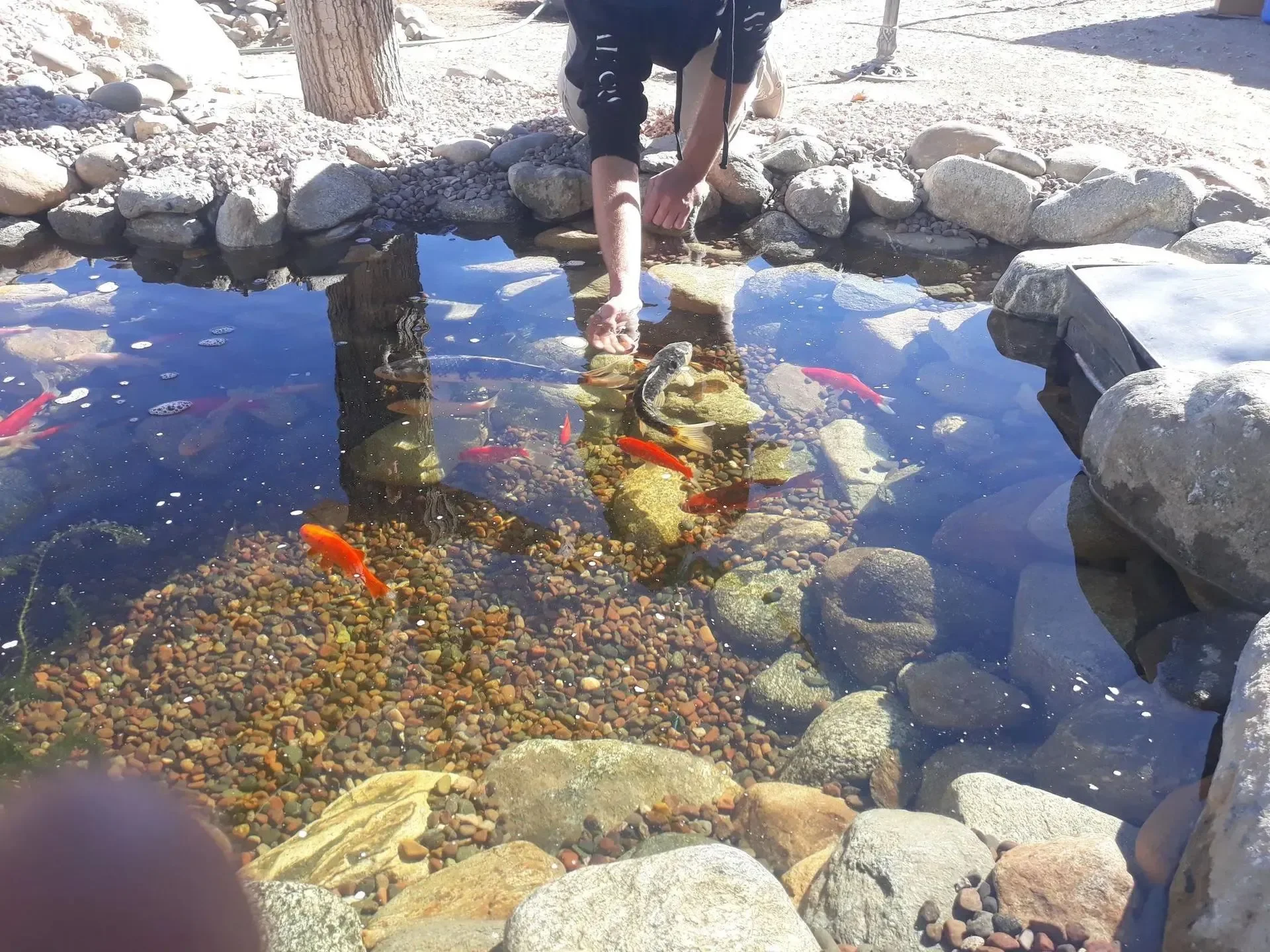
The summer you installed your koi pond, the fish were active, the water ran clear, and the whole setup looked exactly the way you imagined it. By midsummer the following year, you noticed a filmy green cast creeping across the surface, your fish were hovering near the surface gasping, and the water smelled faintly like a wet sock left in a hot car. That sequence of events is not bad luck. It is what happens when a koi pond designed for moderate coastal or Midwest climates operates in a high desert environment without the management adjustments those conditions demand. The Mojave High Desert presents a specific set of stressors that pond owners in other regions simply do not face at the same intensity.
Hesperia, California sits at roughly 3,200 feet in elevation, where summer air temperatures routinely push past 105 degrees Fahrenheit and relative humidity can drop below 10 percent. Those two factors alone separate high desert koi pond management from everything the standard hobbyist guides describe. This article walks through the biological, chemical, and mechanical realities of keeping a koi pond alive and thriving in that environment, covering filtration load, temperature management, water loss, oxygen levels, and seasonal transition care. If you own a pond in the Victor Valley or the surrounding high desert communities, this is the information your pond actually needs.
